
How Postcard Design Can Make Direct Mail More Effective
In a world filled with emails, social media posts, and digital advertisements, direct mail can offer something increasingly valuable: a physical message that people can see and hold.
Among the different formats used in direct mail marketing, postcards are particularly effective because they are simple, compact, and immediately visible.
Unlike an envelope that needs to be opened, a postcard presents its message as soon as it reaches the recipient. This makes the design especially important.
A well-designed postcard can capture attention, communicate an offer quickly, reinforce your brand, and encourage the recipient to take action.
But what makes postcard design effective?
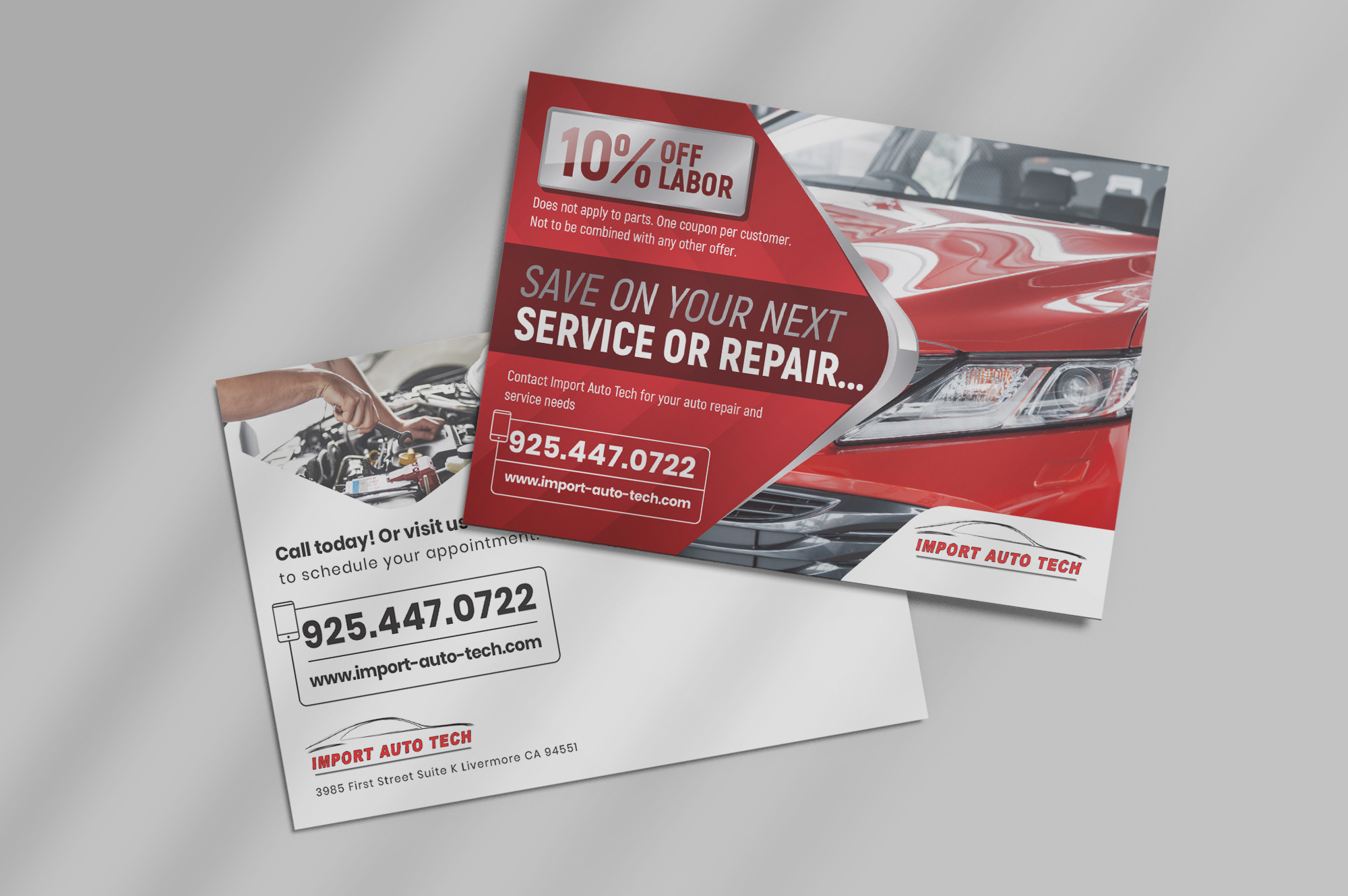
1. Postcards Get Your Message Seen Immediately
One of the biggest advantages of postcards is their simplicity.
There is no envelope to open and no lengthy document to read before discovering the message. The recipient sees the design as soon as the postcard arrives.
This means the front of the postcard needs to communicate quickly.
A strong design should make it easy to understand:
- Who the message is from
- What is being offered
- Why it matters
- What the recipient should do next
The first few seconds matter.
If the design is cluttered or the main message is difficult to find, the postcard may be ignored.

2. Strong Visual Design Captures Attention
A postcard has limited space, so every design element needs to work harder.
The combination of imagery, typography, colour, and layout should immediately attract attention without overwhelming the reader.
A strong postcard might use:
- A striking headline
- One strong image
- Clear brand identity
- Simple supporting information
- A prominent call-to-action
The goal isn’t to fill the entire postcard.
It’s to create enough visual interest for someone to stop, look, and read.
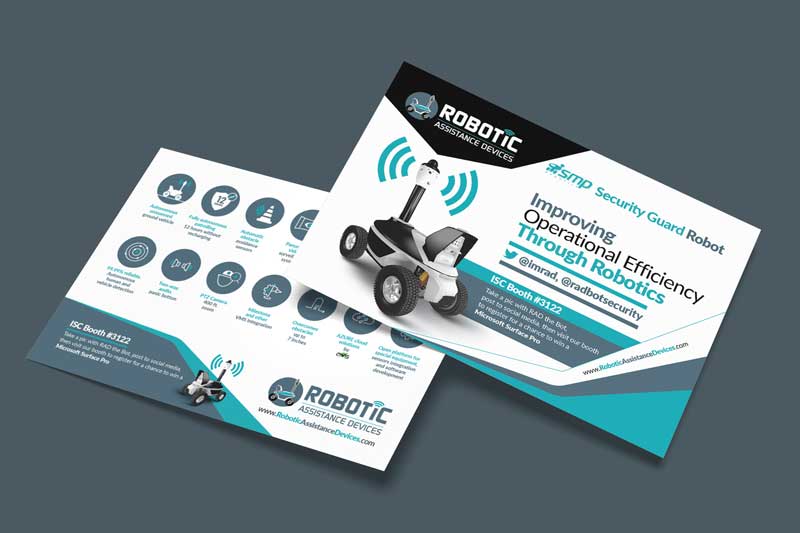
3. One Clear Message Is More Effective
One of the most common mistakes in postcard design is trying to say too much.
Businesses may want to include every service, product, promotion, benefit, contact method, and company detail.
The result can be a postcard that feels more like a miniature brochure.
A postcard works best when it has a focused message.
For example:
- New Service Launch
- Seasonal Promotion
- Grand Opening
- Limited-Time Offer
- Free Consultation
- Visit Our New Location
Once the main objective is clear, the design can be structured around it.
A focused message is easier to understand and more likely to be remembered.
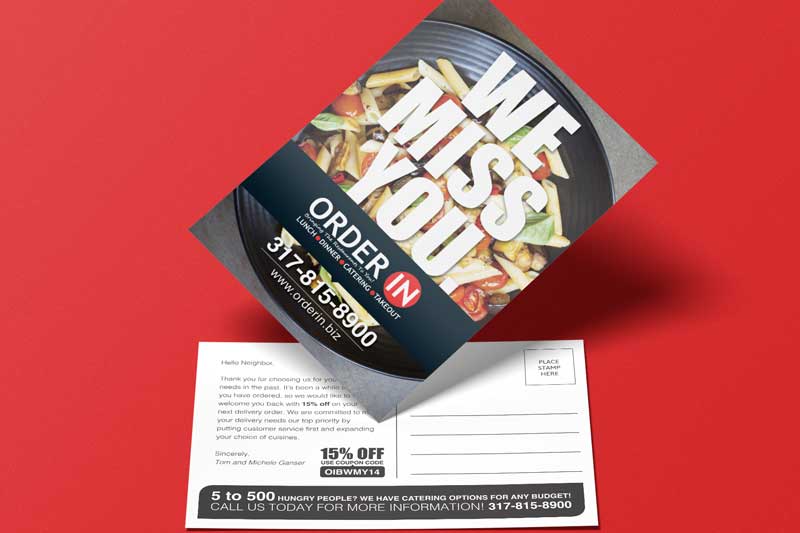
4. Your Headline Needs to Work Hard
The headline is often the first piece of text people notice.
It should communicate the main benefit or message quickly.
Instead of using a generic headline such as:
“Welcome to Our Business”
consider something more relevant to the recipient, such as:
“Refresh Your Home Before Summer”
or
“Get a Free Consultation for Your Next Project”
The exact message will depend on the business and campaign, but the principle is the same.
Lead with something your audience cares about.
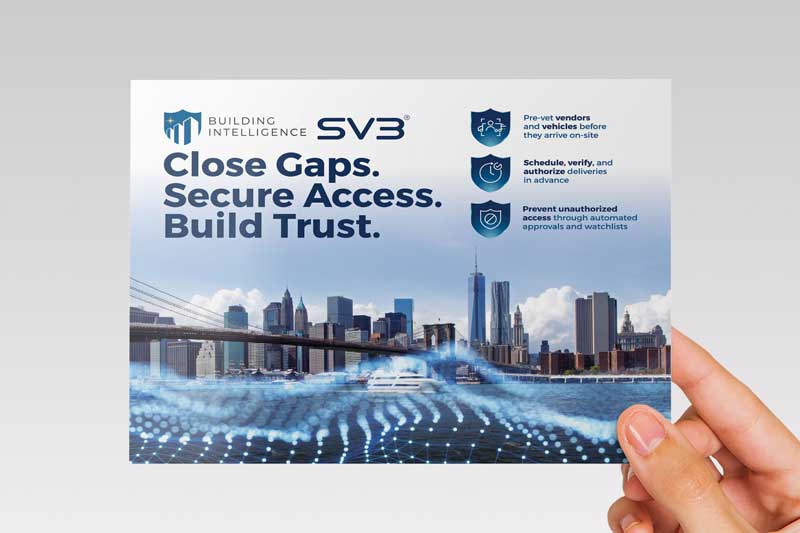
5. Good Typography Makes the Message Easy to Scan
Postcards are usually viewed quickly, so readability is essential.
Avoid filling the design with long paragraphs or overly decorative typography.
Instead, use a clear hierarchy:
Headline
↓
Supporting message
↓
Key benefit or offer
↓
Call-to-action
This allows recipients to understand the postcard even if they only spend a few seconds looking at it.
Typography should also be large enough to remain readable in print and should have sufficient contrast against the background.
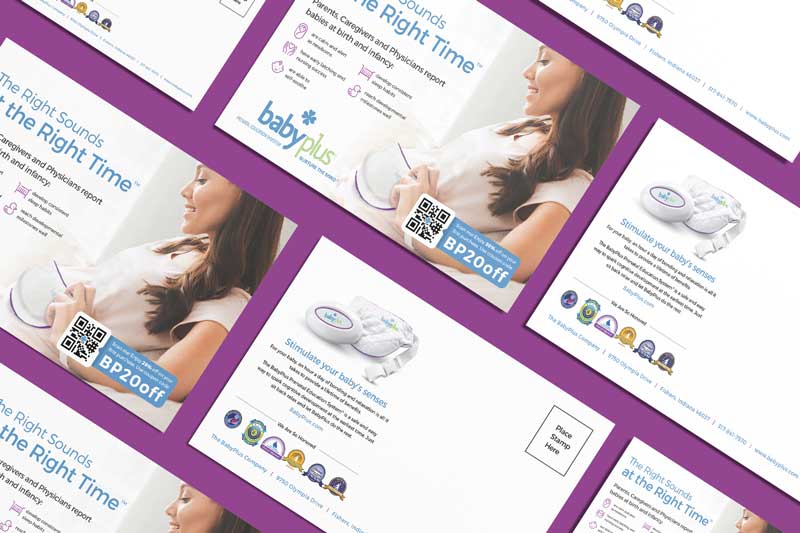
6. High-Quality Images Can Increase Impact
Images can communicate a message almost instantly.
Depending on the campaign, you might use:
- Product photography
- Lifestyle photography
- Before-and-after images
- Project photography
- Brand imagery
- Illustrations
- Custom graphics
The image should support the message rather than simply decorate the postcard.
For example, a restaurant promoting a new menu might use an appetising food photograph, while a home renovation company could showcase a strong project image.
Relevant imagery makes the message easier to understand.
7. Strong Branding Makes Your Postcard Recognisable
A postcard shouldn’t look like a generic advertisement.
Your brand identity should be immediately recognisable through consistent use of:
- Logo
- Colours
- Typography
- Photography
- Graphic elements
- Brand messaging
This is particularly important if the recipient already knows your business.
When the postcard visually connects with your website, packaging, social media, brochures, and other marketing materials, it strengthens overall brand recognition.
Every marketing piece should feel like part of the same brand.

8. A Strong Call-to-Action Turns Attention Into Action
Getting someone to notice your postcard is only the beginning.
The ultimate goal is usually to encourage an action.
Your call-to-action should be clear and easy to understand.
Examples include:
- Visit Our Website
- Scan to Learn More
- Call Today
- Book a Consultation
- Request a Quote
- Visit Our Store
- Claim Your Offer
- Register Online
Don’t make recipients guess what they should do next.
A clear call-to-action gives the campaign direction.
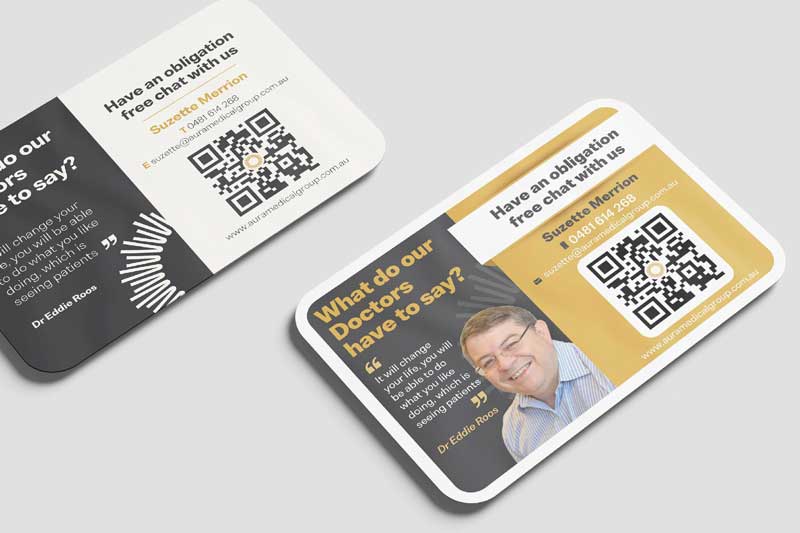
9. QR Codes Connect Print With Digital
One of the biggest advantages of modern postcard design is the ability to connect physical marketing with digital experiences.
A QR code can send recipients directly to:
- A landing page
- Product page
- Online store
- Booking system
- Special promotion
- Event registration
- Portfolio
- Contact form
This creates a simple journey:
Postcard → QR Code → Website → Action
However, the QR code shouldn’t replace the main message.
It should support it.
Always provide a short explanation of what happens when someone scans the code, such as:
Scan to claim your offer
or
Scan to book your consultation
This gives people a reason to take action.
10. The Back of the Postcard Has an Important Job
The front and back of a postcard can serve different purposes.
The front can focus on grabbing attention and communicating the main message.
The back can provide additional information and make the response process easy.
Depending on the campaign, the back might include:
- Contact information
- Offer details
- Terms and conditions
- Address
- QR code
- Website
- Social media
- Short supporting content
The two sides should work together rather than compete with one another.
Design Your Postcard Around Your Audience
A postcard aimed at homeowners should look different from one targeting corporate decision-makers.
Understanding your audience helps determine:
- Tone
- Imagery
- Colour
- Typography
- Message
- Offer
- Call-to-action
For example, a premium professional service may benefit from a sophisticated and restrained design, while a family-focused local promotion might use a more approachable visual style.
There is no universal postcard design.
The right design depends on who you’re trying to reach.
Postcard Design for Different Types of Businesses
Postcards can be used across many industries.
Local Businesses
Restaurants, salons, retail stores, home services, and other local businesses can use postcards to promote offers or announce new services.
Professional Services
Consultants, agencies, designers, financial professionals, and other service providers can use postcards to introduce services or promote consultations.
Real Estate
Real estate professionals can use postcards for property promotions, market updates, neighbourhood campaigns, and personal branding.
Events
Postcards can promote openings, exhibitions, workshops, conferences, and other events.
Retail and eCommerce
Retail brands can use postcards to promote new products, seasonal campaigns, discount offers, or store launches.
Creative Businesses
Designers, photographers, architects, and creative studios can use postcards as promotional pieces that demonstrate their visual capabilities while communicating their services.
Personalisation Can Make Direct Mail More Relevant
Generic marketing messages are easy to ignore.
Personalised direct mail can feel more relevant because it speaks to a specific audience.
Depending on the campaign, businesses can personalise:
- Recipient name
- Location
- Product interests
- Previous purchases
- Special offers
- Local information
Even simple personalisation can make a postcard feel more intentional.
However, personalisation should always be useful rather than gimmicky.
Measure Your Direct Mail Campaign
One of the biggest misconceptions about print marketing is that it can’t be measured.
Modern campaigns can be tracked in several ways.
For example, you can use:
- Unique QR codes
- Dedicated landing pages
- Promotional codes
- Campaign-specific URLs
- Unique phone numbers
- Trackable offers
This allows businesses to determine which campaign generated enquiries, website visits, bookings, or sales.
Combining print with digital tracking can make direct mail much more measurable.
Common Postcard Design Mistakes
Even a well-intentioned campaign can lose effectiveness because of poor design.
Too Much Information
A postcard isn’t the place to explain everything about your business.
Keep the message focused.
Weak Hierarchy
If the headline, offer, logo, and supporting text all have the same visual importance, nothing stands out.
Poor Readability
Small text, weak contrast, and complicated fonts can make the message difficult to understand.
No Clear Call-to-Action
If recipients don’t know what to do next, the campaign may fail to generate a response.
Weak Branding
A postcard that doesn’t clearly identify your business may be forgotten even if the design looks attractive.
Poor Print Quality
Low-resolution images, incorrect colours, or unsuitable paper can reduce the professional impression of the campaign.
Print and Digital Marketing Work Better Together
The most effective postcard campaigns don’t treat print and digital marketing as separate activities.
A postcard can introduce the campaign.
A landing page can provide additional information.
Social media can reinforce the message.
Email can follow up with interested customers.
Analytics can measure the results.
This creates a connected marketing journey where each channel supports the others.
Instead of asking whether print or digital marketing is better, consider how they can work together.
When Should You Use Postcard Marketing?
Postcards can be particularly useful when you want to:
- Promote a special offer
- Reach customers in a specific location
- Launch a new service
- Announce a new business location
- Promote an event
- Re-engage existing customers
- Introduce a new product
- Support a wider marketing campaign
The key is having a clear objective and a well-defined audience.
Final Thoughts
A postcard may be small, but it can make a strong impression when it is designed strategically.
Effective postcard design combines strong visual communication, clear messaging, consistent branding, relevant imagery, and a compelling call-to-action.
When connected with digital tools such as QR codes and dedicated landing pages, postcards can also become part of a measurable marketing campaign.
The goal isn’t simply to put an advertisement on paper.
It’s to create a physical message that captures attention and encourages people to take the next step.
Learn More About Marketing & Print Design
Why Print Marketing Still Works in a Digital World
How Professional Brochure Design Can Help Your Business Stand Out
Why Business Card Design Still Matters for Professional Branding
How Postcard Design Can Make Direct Mail More Effective
Marketing Collateral: What Your Business Really Needs
Featured Marketing & Print Design Case Studies
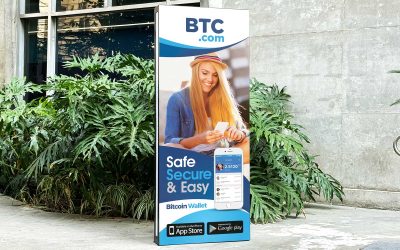
BTC.com
Creating a clearer, more engaging event banner for BTC.comOverview The goal of this project was to redesign a...
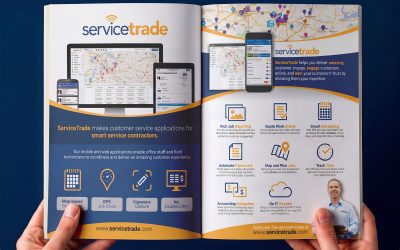
ServiceTrade
Designing a Magazine Advertisement That Explains Complex Software Clearly Overview ServiceTrade is a cloud-based field...
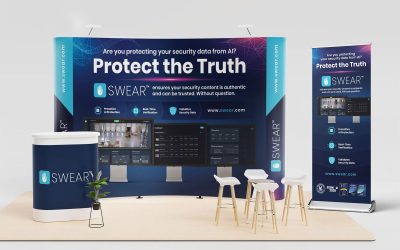
SWEAR
Creating a Trade Show Experience That Builds Brand Visibility and Trust Overview SWEAR is a technology company...
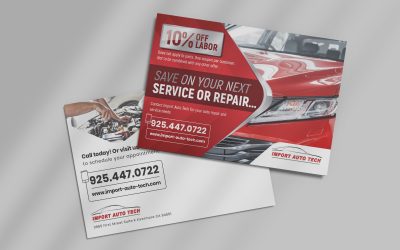
Import Auto Tech
Creating Direct Mail That Encourages Customer Engagement and Service Bookings Overview Import Auto Tech is an...
Create Print Marketing That Gets Noticed
At KitCreativity, we create professional postcard and marketing collateral designs that help businesses communicate their message clearly and consistently.
From promotional postcards and direct-mail campaigns to brochures, business cards, packaging, and other printed materials, each design is created around the brand, audience, and marketing objective.
Planning your next print marketing campaign? Get in touch with KitCreativity to discuss your project.