
How Good Website Design Builds Trust and Credibility
A website can look impressive, have excellent content, and offer valuable services, but if it takes too long to load, visitors may never see any of it.
Website speed is one of the most overlooked aspects of web design. Businesses often focus on colours, typography, imagery, and layouts while forgetting that the overall experience also depends on how quickly the website responds.
For visitors, a slow website can be frustrating. For businesses, it can mean fewer enquiries, lower engagement, and lost opportunities.
So why does website speed matter, and how can a faster website benefit your business?
1. Visitors Expect Websites to Load Quickly
People are used to fast digital experiences.
When someone clicks on your website, they expect the page to appear quickly. If they are left staring at a loading screen, they may simply go back and choose another website.
This is particularly important for businesses competing in crowded markets.
A potential customer may have several companies to choose from. If your competitor provides a faster and smoother online experience, you may lose the opportunity before the customer even learns what your business offers.
Website speed isn’t just a technical issue.
It’s part of the customer experience.

2. Slow Websites Create a Poor First Impression
Your website is often the first interaction someone has with your business.
A slow-loading website can create an impression that your business is outdated, poorly maintained, or difficult to deal with, even when none of those things are true.
Think about the difference between these two experiences:
Website A: The homepage loads quickly, the navigation responds immediately, and visitors can start exploring without interruption.
Website B: Images take several seconds to appear, pages respond slowly, and visitors have to wait before interacting with the site.
The difference isn’t simply technical.
It affects how visitors perceive the company behind the website.
A fast, responsive experience can reinforce the professionalism that your visual design is trying to communicate.
3. Website Speed Can Affect Conversions
The purpose of a business website isn’t simply to attract visitors.
It should encourage them to take action.
Depending on the business, that action could be:
- Requesting a quote
- Booking an appointment
- Sending an enquiry
- Purchasing a product
- Signing up for a newsletter
- Calling the business
- Viewing a portfolio
- Starting a conversation
If a visitor becomes frustrated before reaching the relevant page, there’s a good chance the conversion opportunity disappears.
A faster website removes unnecessary friction from the customer journey.
The easier it is for visitors to move from one step to the next, the easier it becomes for them to take action.

4. Mobile Users Are Especially Important
Website speed becomes even more important on mobile devices.
People often browse websites while travelling, waiting, shopping, or using mobile data. They may not have the same connection speed or processing power as someone using a desktop computer on a fast broadband connection.
A website that loads reasonably quickly on a desktop may still feel slow on a smartphone.
That’s why modern website design should consider performance across different devices and connection conditions.
A responsive website should not only fit the screen.
It should provide a smooth experience regardless of how visitors access it.
5. Large Images Can Slow Down Your Website
High-quality images are an important part of professional website design.
However, large image files can significantly increase page loading times.
This is particularly common with:
- Hero banners
- Portfolio images
- Product photography
- Background images
- Large graphics
- Uncompressed PNG files
The solution isn’t to remove high-quality visuals.
Instead, images should be properly prepared for the web.
This can involve resizing images to appropriate dimensions, compressing file sizes, and selecting suitable formats without sacrificing the visual quality visitors actually need.
Good web design finds the balance between visual quality and performance.

6. Too Many Features Can Hurt Performance
More functionality doesn’t automatically make a website better.
Websites can become overloaded with plugins, animations, third-party scripts, tracking tools, pop-ups, widgets, and other features.
Every additional element can potentially affect loading and responsiveness.
Before adding another feature, ask:
Does this improve the customer’s experience or help achieve a business goal?
If the answer is no, it may not be worth the performance cost.
A well-designed website focuses on the features that actually matter.
7. Website Speed Can Support SEO
Website performance is also relevant to search engine optimisation.
Search engines want to provide users with useful results and good experiences. Website performance is therefore one of the factors considered when evaluating pages.
However, speed isn’t the only part of SEO.
A successful website also needs:
- Useful and relevant content
- Clear page structure
- Good mobile usability
- Strong technical foundations
- Descriptive page titles
- Appropriate internal linking
- Search-friendly content
This means improving website speed shouldn’t be viewed as a replacement for SEO.
Instead, it should be part of a broader strategy for creating a high-quality website.

8. Fast Websites Make Navigation Feel Better
Website performance isn’t only about the initial page load.
Visitors notice how quickly the entire website responds.
For example, imagine a customer browsing your services page. They click on another service, then your portfolio, and finally your contact page.
If every interaction feels immediate, the website feels effortless to use.
If every click involves waiting, the experience becomes increasingly frustrating.
This is why performance should be considered throughout the entire customer journey, not just on the homepage.
9. A Website Redesign Is an Opportunity to Improve Performance
If your existing website is several years old, performance problems may have accumulated over time.
You might have:
- Added large images
- Installed multiple plugins
- Added new functionality
- Changed hosting
- Accumulated unnecessary code
- Added third-party services
- Built pages without considering performance
A website redesign provides an opportunity to review the entire experience.
Instead of simply changing the colours or rearranging sections, you can rethink the site’s structure, content, functionality, and technical performance.
The result can be a website that looks better and works better.

How to Make Your Website Faster
Improving website speed doesn’t necessarily mean rebuilding everything from scratch.
There are several practical areas worth reviewing.
Optimise Images
Resize and compress images before uploading them. Use modern formats where appropriate and avoid serving images significantly larger than the dimensions visitors actually need.
Reduce Unnecessary Features
Review plugins, animations, widgets, and third-party scripts. Remove anything that doesn’t contribute meaningful value to the user or business.
Improve Hosting
Your hosting environment can influence website performance. A reliable hosting provider with appropriate resources can provide a stronger foundation for a business website.
Use Browser Caching
Caching can allow frequently used website resources to be stored temporarily, reducing the amount of information that needs to be loaded repeatedly.
Keep Your Website Updated
Outdated themes, plugins, and website platforms can create performance and security problems.
Regular maintenance helps keep the website running efficiently.
Test Your Website Regularly
Don’t assume your website is fast simply because it loads quickly on your own computer.
Test it across different devices and connection conditions to understand what your actual visitors may experience.
Don’t Sacrifice Design for Speed
Improving website performance doesn’t mean creating a boring website.
You don’t have to eliminate beautiful photography, animations, or visual details simply to make a website fast.
The goal is to use them intelligently.
Good website design considers both:
How does the website look?
and
How does the website perform?
The strongest websites balance aesthetics, usability, branding, accessibility, and performance.
A beautiful website that frustrates visitors isn’t successful design.

Website Speed Is Part of Your Brand Experience
Brand experience doesn’t stop at your logo, colour palette, or typography.
Every interaction with your business contributes to how customers perceive you.
If your website is fast, clear, responsive, and easy to navigate, it creates a sense of professionalism and efficiency.
If it is slow, confusing, and difficult to use, visitors may associate those frustrations with the business itself.
This is why performance should be considered a fundamental part of website design rather than something to fix after the design is finished.
Final Thoughts
Website speed is more than a technical metric.
It affects first impressions, user experience, mobile usability, search visibility, and ultimately your ability to turn visitors into customers.
A fast website allows people to find information quickly, explore your services comfortably, and take action without unnecessary delays.
If your current website feels slow, difficult to navigate, or outdated, it may be time to look beyond the surface and consider how the entire experience can be improved.
Good website design should not only look great. It should feel effortless to use.
Learn More About Website Design
Why Your Business Needs a Professional Website (Even in the Age of AI)
Why Custom Website Design Is Better Than Using a Template
5 Signs Your Business Website Needs a Redesign
How Good Website Design Builds Trust and Credibility
Website Speed Matters: Why Fast Websites Convert Better
How Website Design Can Help Generate More Leads for Your Business
Featured Web Design Case Studies
Eco Armour Pest Control
Designing a Modern, Eco-Conscious Digital Presence for an Australian Pest Control BrandProject Overview Eco Armour...
WI Design & Renovation
Designing a Modern WordPress Website That Showcases Expertise and Builds Client Confidence Overview WI Design &...
SeanMas
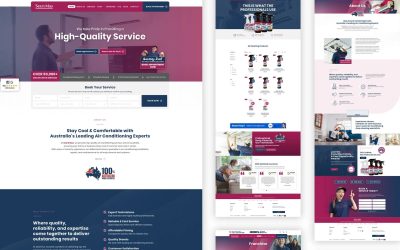
Creating a Customer-Focused Website That Builds Trust and Drives Service EnquiriesOverview SeanMas is a professional...
Is It Time to Refresh Your Website?
At KitCreativity, we create modern, responsive websites that combine clean design, strategic user experience, and SEO-friendly best practices. Whether you need a complete redesign or want to improve your existing website, we can help transform your online presence into a powerful marketing tool.
Ready to give your website a fresh new look? Let’s discuss your project today.